
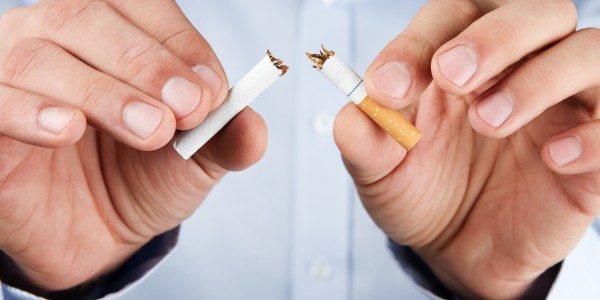
Smokers kick the habit, thanks to the success of Break Free
Over the past 8 years, the Mental Health Butt-Out Program and the Addictions Tobacco Dependence Clinic have successfully started 2,500 clients along a path to a smoke-free lifestyle.
Last year these two programs joined forces to offer a comprehensive mental health and addictions tobacco treatment program called Break Free. Here’s a glimpse of what these successes look like, courtesy of Lindsay Killam, Vancouver Community’s MH&A Tobacco Treatment Coordinator:
“I am constantly inspired by the barriers that people overcome and delight in the excitement that people experience when they quit smoking and are suddenly able to save money – to buy something new, have a special meal out or save for a vacation. For others, kicking their tobacco dependence means they can buy a bus pass and experience mobility for the first time in years.
Back when I was working at Pacific Spirit, the program ran on the third floor. The building had an old slow elevator. On the first week of treatment I used to joke with the group that by Week Eight, everyone would be taking the stairs and getting to the third floor faster than if they had used the elevator. This was always met with groans and disbelief. Yet, sure enough, as each week passed, more and more people would forget about the elevator and take the stairs. I would often be met with a smile and this remark: ‘I never thought I could do this, but my lungs feel so good. I can breathe so much better.’
Recently, I had a client who really struggled with even the most minimal reduction in smoking. She had been a long-time smoker of as many as 40 cigarettes per day. At Week 14, most of the group had quit. This client stated her discouragement and wanted to throw in the towel. The group rallied around her and shared some of their past attempts at quitting and some of their ongoing emotional struggles. The next week that client showed up and reported that she had reduced her daily smoking to fewer than 20 cigarettes per day. This was a huge achievement. She reported back that she had listened to the others’ stories and said to herself, ‘Heck everybody has their emotional crap. Why should I let mine hold me back?’ Her change in thinking also changed her relationship with cigarettes, and now she is on the path to quitting.
I have learned that with consistent, non-judgmental support and a sufficient dose of nicotine replacement therapy — Champix or Zyban — anyone, no matter how long or how much they have smoked, can achieve success.”
What is Break Free?
Break Free is a comprehensive treatment model that provides up to 26 weeks of no-cost pharmacotherapy and cognitive behavioural counselling. The program’s mantra: Quitting smoking is a process and not an event. People can reduce smoking as they feel comfortable and practice quitting when they are ready. In 26 weeks, some people practice quitting several times before seeing longer term success. It is about building confidence and self-efficacy and not success or failure based on a designated quit date.
On the path to success
According to data published in 2011 in the American Journal on Addiction, more than 43 per cent of clients had quit smoking upon completion of the program (minimum of 8 weeks treatment). For those who haven’t quite quit, they have likely experienced at least a day or two being smoke-free. And even if they don’t quit completely, almost every person has significantly reduced their daily smoking.
If you would like more information about Break Free or would like to make a referral to the program, please contact Lindsay Killam at 604-675-6691.